case study
How did one designer fix a sizing error after two thousand people already bought the pattern?
A post release correction has a sequence: confirm the fault, scope who is affected, publish a versioned errata sheet, replace the file and notify every prior buyer. A walkthrough of that sequence.
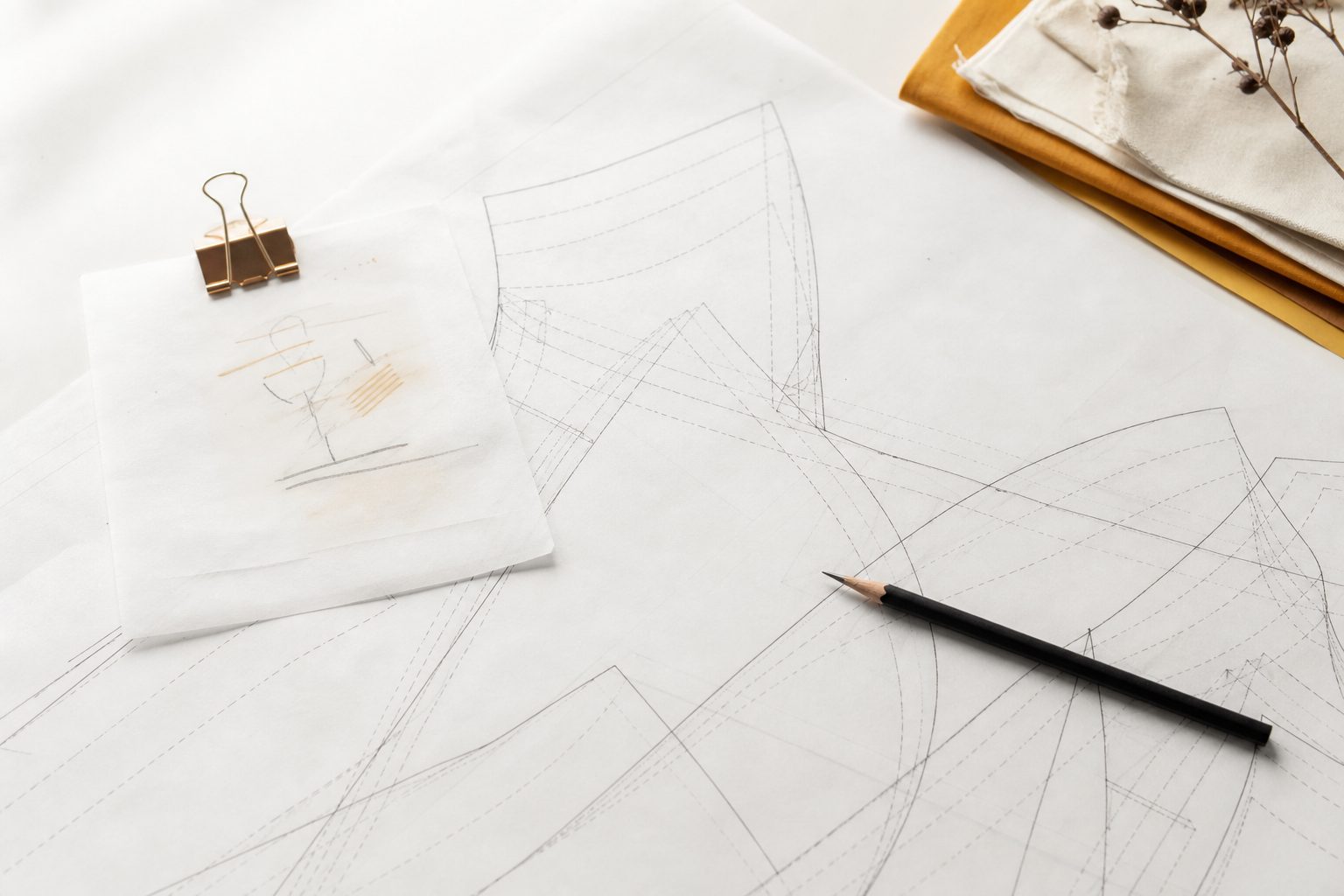
She did it in a fixed order, and the order is the whole lesson. Confirm the fault is real before saying a word in public. Scope exactly which sizes and which pages carry it. Publish a one page errata that a buyer can use without redownloading anything. Then replace the master file, bump the version number, and notify every prior buyer through each channel they bought from.
The designer in this walkthrough is a composite, drawn from the shape these corrections take again and again in independent pattern businesses. The garment is a woven button front dress. The error was a back neckline that had been graded with the wrong shoulder slope increment above a certain size, so the larger sizes had a back neck roughly three quarters of an inch too wide. Around two thousand copies were already out.
Nothing here is dramatic. That is the point. A correction handled in sequence is an administrative task with a cost you can name. A correction handled by panicking in a Facebook group at eleven at night is a reputational event.
Confirming the error before announcing anything
The first report came from one sewist, in a comment, with a photo of a gaping back neck. That is not yet an error. It is a data point that competes with a dozen other explanations: a stretched neckline from handling a bias curve, a skipped stay stitch, a different interfacing, a size chosen by bust rather than by high bust.
Confirmation means reproducing the fault from the file itself, not from a made garment. Three checks settle it.
- Measure the affected line on the pattern piece in the design file, at every size, and compare the increments to the intended grade rule. A grading error shows up as a step that breaks the pattern of the others.
- Walk the seam. Measure the back neckline against the front neckline and against the collar or facing that finishes it. If they no longer match, the fault is in the pattern, not the sewing.
- Print the exact released file at one hundred percent and measure the paper, because a fault can live in the export rather than the source.
She found the break at the fourth largest size and above. Everything below it was correct. Until she knew that, she had nothing worth publishing, and an announcement that says "there may be an issue somewhere" generates more support email than the error ever would.
Keep reading: Is the market for printed paper patterns actually coming back, or is that wishful thinking?
Scoping the fault: which sizes, which pages, which print layouts
Scope is what turns a vague apology into a usable notice. Buyers want to know one thing: does this affect me?
She wrote scope down as a grid before touching any file. Affected sizes, listed explicitly by name rather than as "the larger sizes." Affected pattern pieces: back bodice, back neck facing, and the collar stand, because the correction propagates. Affected pages in each layout: the tiled letter file, the A0 file, and the projector file each place those pieces differently, so the page numbers differ per format.
That grid also revealed the part that is easy to forget. The instruction booklet contained a finished measurement chart with a back neck width column. Those numbers were now wrong for the affected sizes too. A correction that fixes the pieces and leaves a stale measurement table is a second errata waiting to happen.
Writing errata that stands alone from the full pattern
An errata sheet is a document a buyer can print by itself and act on without opening the seventy page pattern. It is not a changelog and it is not an apology letter.
The version she published had six parts, in this order.
- A one sentence statement of what is wrong, in plain sewing language, not in CAD language.
- The affected sizes, spelled out.
- How to tell whether your copy is affected, using something visible on the printed page: in this case the file version stamp in the page footer.
- What to do if you have not cut yet: download the corrected file, print only the listed pages, retile that section.
- What to do if you have already cut: a redraw instruction with two measurements and a curve, so a cut piece can be corrected rather than scrapped, plus a note on when the fabric cannot be saved.
- The corrected finished measurements for the affected sizes.
The fifth point is the one buyers remember. A designer who tells a woman with a cut but unsewn bodice exactly how to salvage it has done something no refund does.
Version numbers and dated changelogs inside the PDF
You cannot manage a correction if you cannot tell two files apart. Version stamping is the cheapest insurance in this trade and it has to exist before the error, not after.
The working convention: a version identifier in the footer of every page of every layout, including the tiled pages that get taped together, and a changelog page inside the PDF listing each version with its date and a one line description of what changed. When a buyer emails a photo of a taped tile, the footer tells you which release she is holding.
| Element | Where it lives | Why it matters at correction time |
|---|---|---|
| Version identifier | Footer of every page, every layout | Identifies a buyer's copy from a single photo |
| Release date | Beside the version identifier | Distinguishes a same day re-export |
| Changelog page | Inside the PDF, near the front | Shows a buyer whether her issue is already fixed |
| Layout name | Footer, next to version | Page numbers in errata differ by layout |
Keep reading: What exactly should I check in a pattern PDF before I put it up for sale?
Reaching buyers across a shop, a marketplace and an email list
Two thousand buyers were not in one list. They were split across a direct shop, a pattern marketplace and a bundle sale run with other designers, and those three channels each have different reach.
Her direct shop had order records with email addresses and gave a clean send. The marketplace allowed a message to purchasers of the listing but through its own messaging system, which many buyers never check. The bundle was the hard one: the organizer held the buyer list and the designer did not.
What she actually did, in order: sent to the direct list first with the errata attached and the corrected file linked; updated the marketplace listing file so new buyers got the fixed version immediately, then sent the marketplace message; emailed the bundle organizer with a ready to send message so the organizer only had to press send; and updated the download the automated delivery system serves, so anyone recovering a lost file got the current version.
The failure she avoided is the common one, which is fixing the file and forgetting that the old file keeps flowing to anyone who redownloads from a channel you did not update.
What to say publicly, and where to say it
Public posts serve buyers you cannot reach directly and sewists who have not bought yet. They are not where you break the news, because you cannot control who sees them.
The order that works: direct notification first, then a pinned post in the pattern's own community space, then a note on the product page itself. The product page note matters more than it appears, because it is what a buyer finds three months later when she searches your site with a half remembered problem.
Tone: state the fault, state the sizes, link the errata, thank the person who reported it. No self flagellation. A designer who writes four paragraphs of anguish makes a buyer feel she has to provide reassurance, which is not her job.
See how StitchPattern handles this for independent sewing and knitting pattern design
Refunds, reprints and the cost of the correction
Naming the cost early removes most of the anxiety. Work it out from your own numbers rather than a guess. Using illustrative assumptions for this composite: two thousand buyers, roughly a quarter of them in the affected size range, so about five hundred people exposed.
Assume of those five hundred, most had not cut yet, a smaller group had cut and could correct the piece, and a handful had finished a garment. Assume five garments are unsalvageable and you offer either a refund of a twelve dollar pattern or a fabric credit capped at forty dollars.
- Refunds and credits at those assumptions: a few hundred dollars at most.
- Re-exporting and re-tiling every layout, plus a fresh proof print: an afternoon, not a week, if the source file is organized.
- Support email: the largest real cost, and the one the errata sheet shrinks the most, because a good errata answers the message before it is sent.
The correction is nearly always cheaper than the reputation of having handled it badly. Designers overestimate the refund exposure and underestimate the hours.
Process changes that prevent the same class of error
The useful question after a correction is not "how do I stop making mistakes" but "what class of mistake was this, and what check catches that class."
This was a grade rule error above a break size, which testing missed because the tester round had thin coverage at the top of the range. Three changes address that class.
- Require tester coverage at both extremes of the size range and at every break size where a grade rule changes, and hold the release until those slots are filled rather than launching with the sizes that volunteered.
- Add a seam walk checklist to the pre release routine: every mating seam measured against its partner at the smallest, largest and each break size, recorded as numbers rather than as a tick.
- Have testers report finished measurements on the made garment, not only fit impressions. A number that disagrees with your chart finds a grading fault that "it fits fine" hides.
Where the sequence lives
All of this depends on records you either kept or did not: who tested which size, what they reported, which version each buyer received, and which channels have been updated. Reconstructing that after the fact is where corrections go wrong.
StitchPattern holds the release together end to end. Tester rounds with size coverage you can see before you launch, every correction logged against a version, errata published as its own document, and notification pushed to everyone who already bought, across the channels you sold through. When a fault surfaces, the sequence in this article is already in front of you.