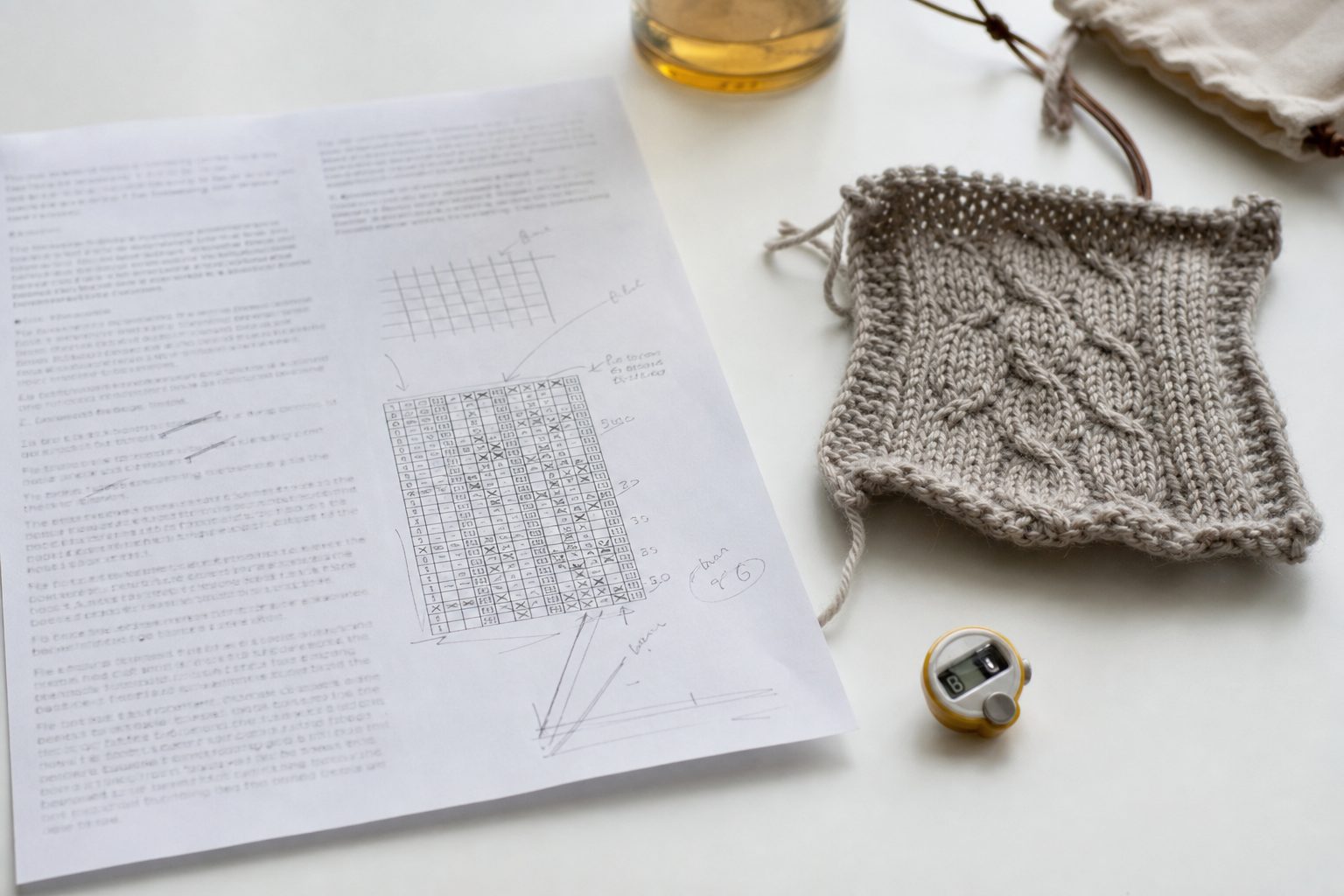
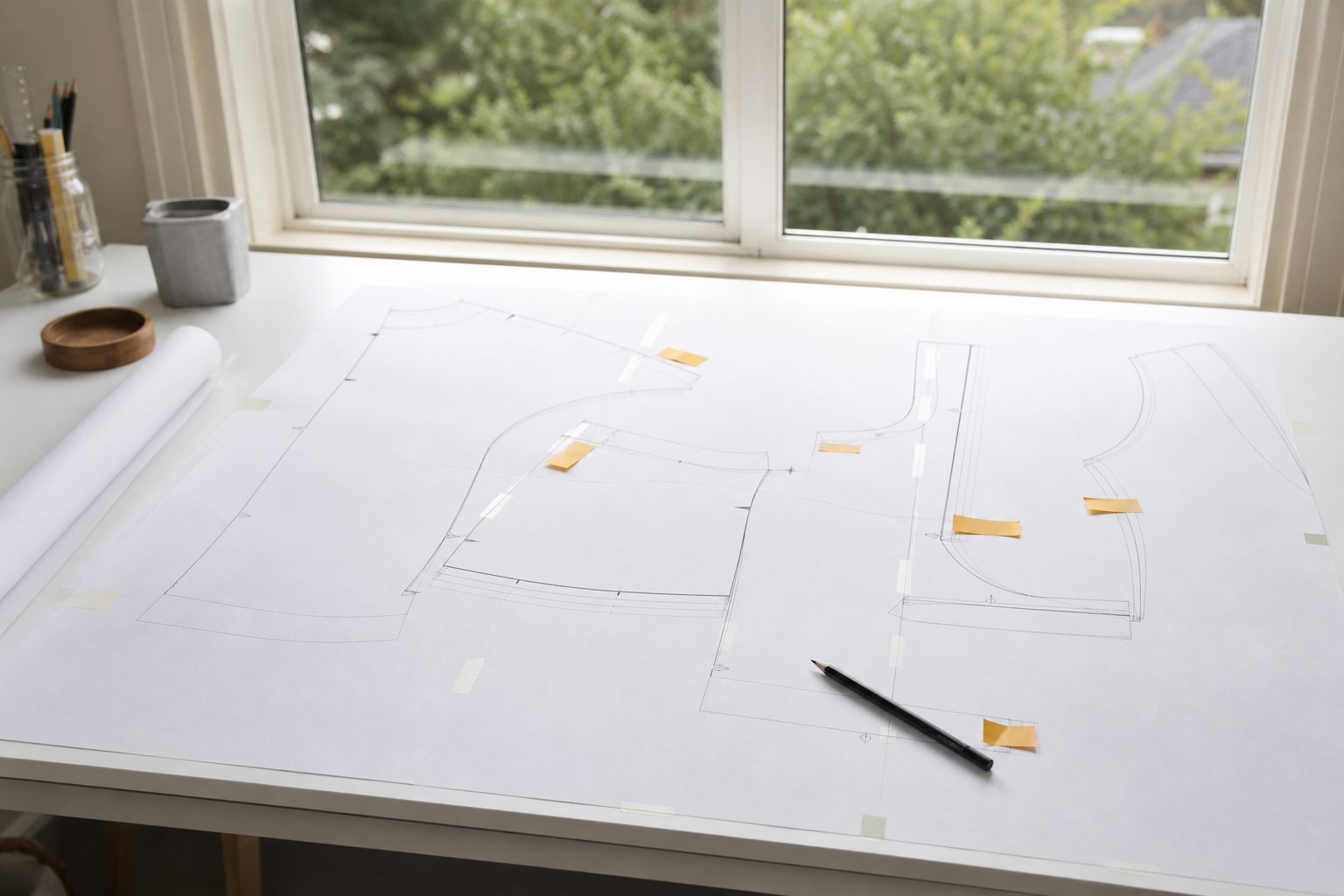
numbers and benchmarks
How should I price a PDF pattern when the tech editor costs more than the pattern earns?
Pattern pricing has to absorb tech editing, sample yarn or fabric, photography, grading and platform fees. Here is how to build the cost stack and find the unit volume that clears it.
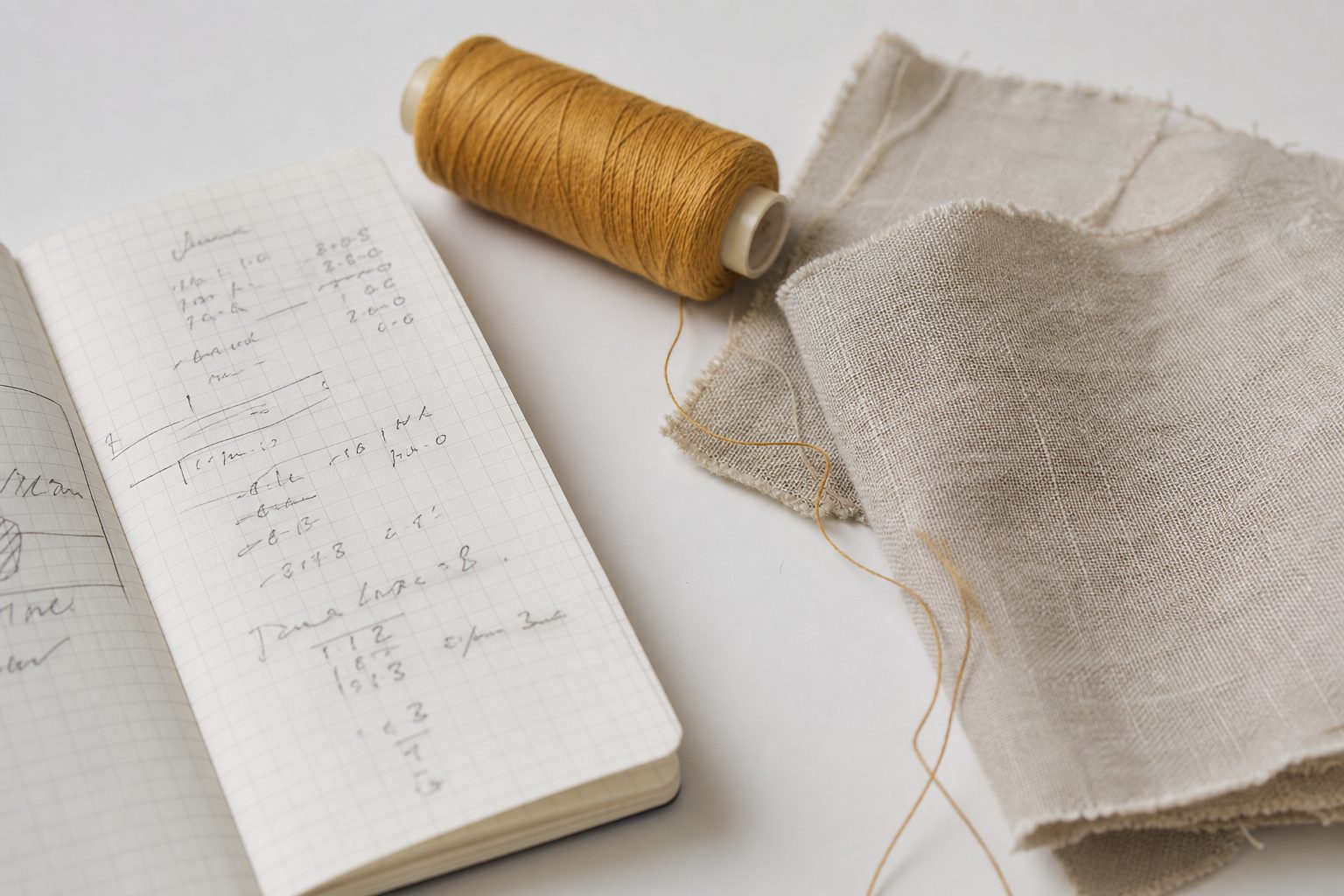
You price against the cost stack and the realistic lifetime unit count, not against launch week. A tech edit that costs more than the pattern earns in its first month is not a pricing problem, it is a time horizon problem: PDF patterns have no marginal cost, so the release cost is amortized over every copy you will ever sell, which for a pattern that stays in the shop is measured in years.
The practical answer for most independent designers in the United States sits between nine and eighteen dollars for a single garment pattern, higher for a multi view or heavily graded release, and the way you land inside that band is by building the stack, dividing it by an honest unit estimate, and then checking that the result is a number your buyer will accept.
Here is how to do that arithmetic without lying to yourself.
Building the release cost stack before choosing a price
List every dollar and every hour that has to happen before the pattern is buyable. Hours count. If you do not price your own labor, you are not running a business, you are subsidizing one.
A worked example for a single garment sewing pattern, graded across twelve sizes. These are assumptions, not survey figures. Substitute your own.
| Line item | Assumption | Cost |
|---|---|---|
| Drafting and grading | 40 hours of your time at $30 | $1,200 |
| Tech editing | Quoted flat | $450 |
| Sample fabric and notions | Three samples, muslin plus final | $180 |
| Photography | Half day, model and photographer | $600 |
| Tester round admin | 10 hours at $30, plus comped copies | $300 |
| Layout and PDF production | 15 hours at $30 | $450 |
| Total release cost | $3,180 |
That number is the one to hold in your head. It is not what the pattern must earn in week one. It is what the pattern must earn before it starts paying you for the next one.
Keep reading: What does a tech editor actually do to a knitting pattern before it goes out the door?
How tech editing is billed: hourly, per size, per page
Editors quote in three shapes, and the shape matters more than the headline rate because it determines who absorbs the risk of a messy manuscript.
- Hourly. Common, transparent, and unbounded. Ask for an estimate range and a check in point, something like "tell me when you hit six hours." A tidy pattern comes in low. A pattern with inconsistent abbreviations and a grade the editor has to reconstruct does not.
- Per page. Predictable for you, risky for the editor, so the per page rate carries a padding factor. Clarify whether pattern piece pages count as pages.
- Per size or per size set. Common in knitwear, where the arithmetic scales directly with the number of sizes. A twelve size grade is roughly twice the checking of a six size grade, and the quote should say so.
Whichever shape you agree, get the scope in writing: does the quote include a second pass after you make corrections? Many editors include one round of re checking on the sections they flagged and bill separately for anything you changed on your own initiative. That second pass is the one that catches the error you introduced while fixing the first error, so budget for it rather than skipping it.
If the quote genuinely exceeds what you can absorb, reduce the scope deliberately rather than dropping the edit. Ask for a math only pass on stitch counts and yardage, and handle style consistency yourself. Say plainly in your listing what was checked.
Sample making, yarn or fabric, and photography costs
Samples are where knitting and sewing diverge sharply. A sweater sample in a mid range wool at eight skeins is a real material cost, and if you are showing three sizes on three bodies you have tripled it. Sewing samples in cotton wovens are cheaper per unit but you will make more of them, because a fit iteration costs a yard and a half every time.
Yarn support from a mill can remove the material line entirely, but it is not free. It usually commits you to naming the yarn, to a launch window that suits the mill, and to a substitution note that keeps the original yarn central. That is a marketing constraint with a dollar value, and it belongs in the same conversation as the price.
On photography, the cheapest real improvement is not a better camera. It is a second sample in a contrasting fabric, so the pattern does not look like one specific garment in one specific color. Buyers who cannot imagine their own version do not buy.
Keep reading: How do I run a tester round for a new sewing pattern without losing three months?
Platform fees and payment processing as a percentage
Gross price is not revenue. Work out your net per unit for each channel you sell through, because the difference changes the break even materially.
Take a $14 pattern. Assume a marketplace that takes a listing plus transaction and processing cut totaling roughly 10 percent, against your own storefront at roughly 3 percent processing plus a fixed transaction fee of about 30 cents plus a monthly platform subscription.
| Channel | Deductions on a $14 sale | Net per unit |
|---|---|---|
| Marketplace at ~10% | $1.40 | $12.60 |
| Own store, 2.9% + $0.30 | $0.71 | $13.29 |
| Own store plus $29/month platform | $0.71 plus fixed monthly | $13.29 less $29 spread over the month's units |
The subscription is the part that catches people. At 20 units a month it is $1.45 per unit and your own store is barely ahead of the marketplace. At 200 units a month it is 15 cents and the store wins comfortably. Sales tax handling and any US state level obligations sit on top of this and vary by where you and your buyer are, so treat them as a separate line rather than folding them into the price.
Break even units and why the long tail beats launch week
Using the $3,180 stack and a $12.60 net on the marketplace, break even is 253 units. On your own store at $13.29 net it is 240 units.
Now ask the honest question: over what period? If you expect 60 units in launch month and then 12 to 20 a month afterward, you clear the stack somewhere between month twelve and month eighteen. That is a normal outcome for a well made pattern, and it is why patterns that get retired at six months rarely pay for themselves.
Which reframes the pricing decision. Raising the price from $14 to $16 lifts marketplace net to roughly $14.40 and drops break even to 221 units, taking three or four months off the payback. If a two dollar increase does not measurably suppress your unit count, and for most independent patterns it does not, it is the single highest leverage change available to you.
A decision rule for the price band
- Total the release cost stack, including your hours.
- Estimate lifetime units conservatively: launch month, plus a monthly steady rate multiplied by 24.
- Divide the stack by lifetime units. That is your floor cost per unit.
- Multiply the floor by three. Below that, you have no margin for the next release, for errata work, or for a support inbox.
- Compare against comparable patterns in your niche. If your number lands well above them, the fix is usually scope, fewer sizes or fewer views, not a lower price.
See how StitchPattern handles this for independent sewing and knitting pattern design
Launch discounts, bundles and what they do to the math
A 20 percent launch discount on a $14 pattern gives up $2.80 per unit. Sell 60 units in launch week and you have handed back $168, which against a $3,180 stack is a fifth of a photography session.
The discount is not automatically wrong. It buys early reviews, early photos of finished garments, and the small burst of visibility that platform algorithms respond to. But price it as a marketing spend with a number attached, not as a reflex, and set an end date you actually enforce. A discount that never ends resets the perceived value of everything else in your shop.
Bundles behave differently. Two patterns at $14 each sold as a pair for $22 gives up $6 but costs you nothing extra to deliver, and it moves an older pattern that had stopped selling. Bundle the new release with the back catalog, not with another new release.
Repricing an older pattern after a revision
A revision is a legitimate moment to raise a price, and the reason is easy to state honestly: the pattern now has more sizes, clearer instructions, or a redrawn set of illustrations, and it cost money to get there.
Do it in this order. Push the revised file to existing buyers first, free, with a short note on what changed. Then raise the price. Then say publicly that the pattern was revised and that everyone who already owned it has the new version. That sequence turns a price increase into evidence that buying from you is safe.
The reverse sequence, raising the price and quietly updating the file, produces the message you least want: that buying early was a mistake.
What to do with these numbers next
Build your own version of the stack table before your next release, not after. The one item that consistently gets left out is the cost of everything that happens after launch: the tester follow ups, the errata, the re export, and the hour spent working out who bought the old version.
StitchPattern is designed to hold that tail down. Tester feedback stays attached to the pattern instead of scattering across email and group threads, corrections get logged against a version number, and when you push a revised file the people who already paid you receive it automatically. Fold a lower post release cost into your stack and the price you need to charge gets easier to defend.